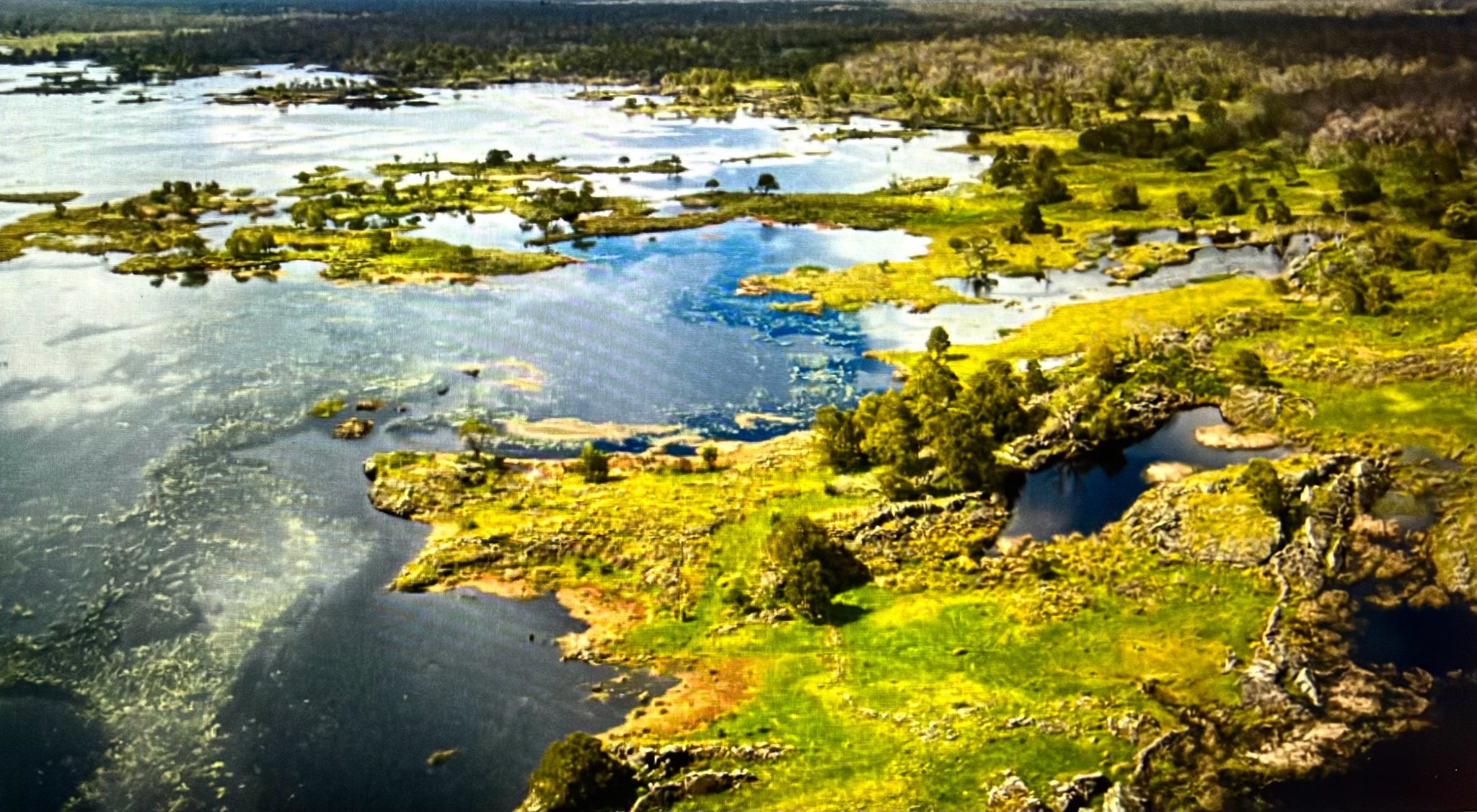
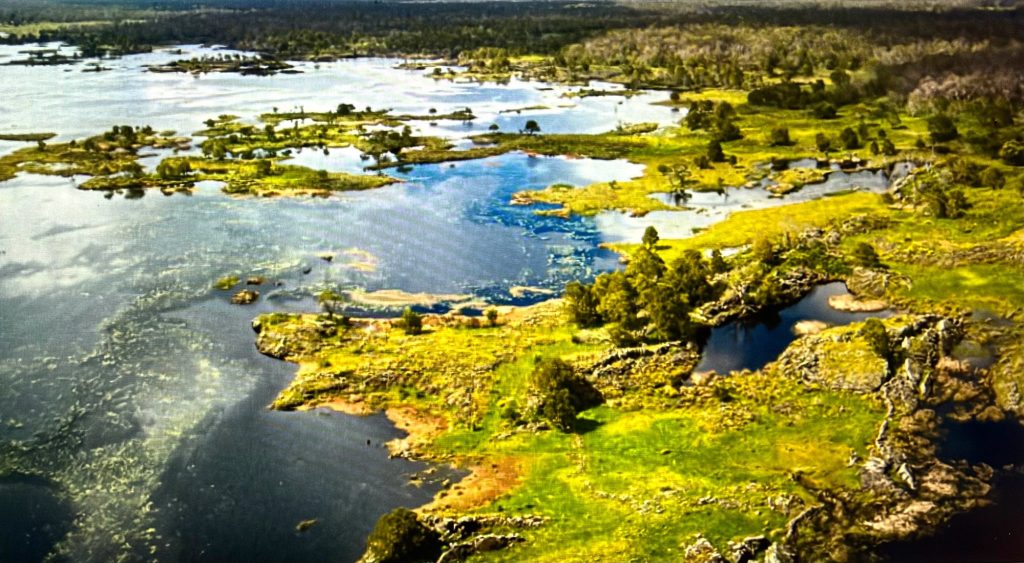
Victoria’s Western District is a vast volcanic plain. Hundreds of eruptions over millions of years, all currently dormant, left deep lava, weathering to fertile volcanic soils, extending from Melbourne, 350 km west to South Australia.
Ending slowly from about 17,000 to 10,000 years ago, the last glacial period persisted for about 100,000 years. During that era, the Budj Bim volcano erupted 36,900 years ago, an event of awe and wonder. The possibility of an oral tradition remembering such ancient pre-history evokes respect.
Gunditjmara legend links the Budj Bim eruption to their creator spirit and, indeed, it did create the local geology. When its lava flow blocked a creek, it created one-hundred square kilometres of swamplands. Gunditjmara people boast that their legend is the world’s oldest creation story confirmed by science. A stone axe found recently, overlain by lava from a simultaneous eruption nearby, testifies indigenous presence before that time, and substantiates their claim.
Before white settlement, explorer, Major Sir Thomas Mitchell recorded in his diaries from 1828 to 1855, park-like landscapes, and villages with fields stooked for harvest. He called this country Australia Felix – from Latin, meaning fruitful, but now signifying Fortunate Australia. For European settlers, it became the wealthy Western District of Victoria.
The underlying volcanic rock was cindery, spongy, and porous with fissures and sink holes forming depressions in the swampland. Before white graziers drained the land for pasture, the country was an idyllic primeval swamp, no slur, as swamps are fertile, bountiful ecologies. Enjoying a land of plenty, Gunditjmara people lived in continuous luxury. At the time of white settlement, life for most Europeans was harsher than for many Australian Aboriginal people.
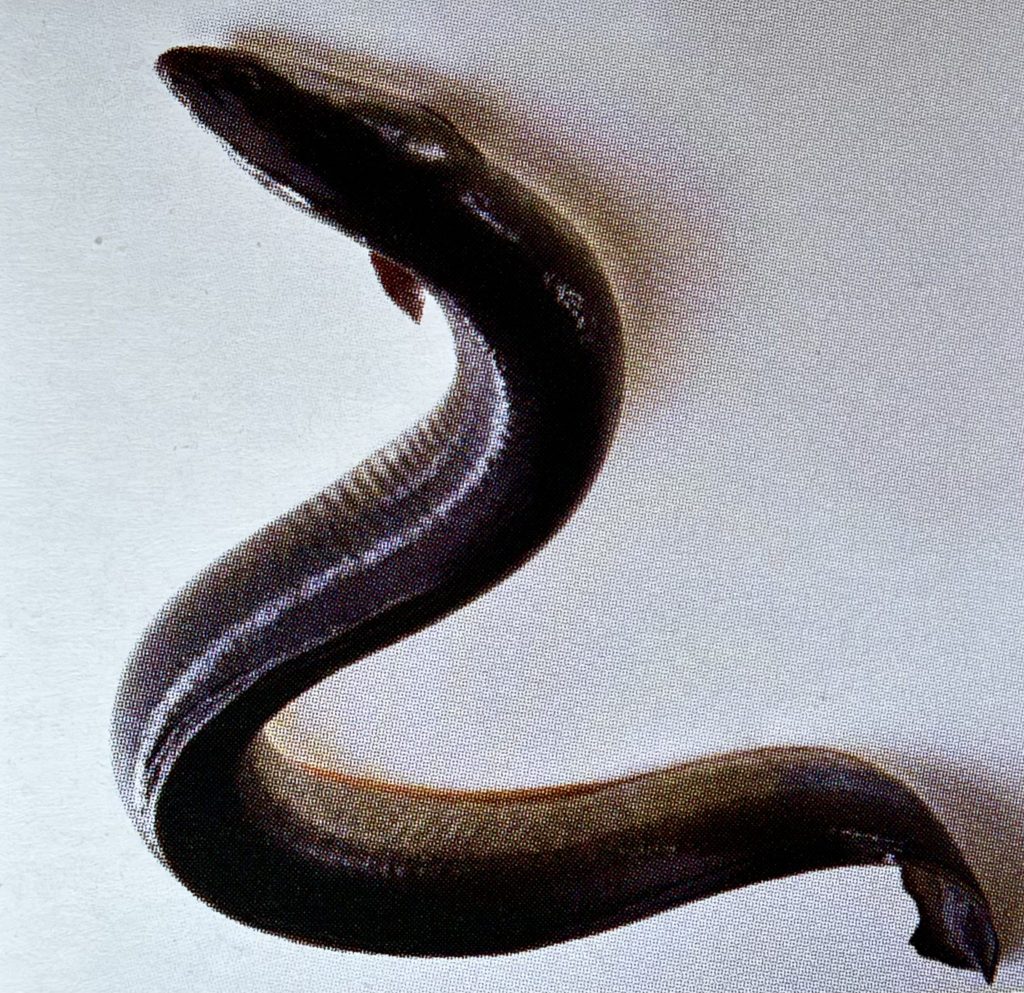
Specifically, Tae Rak swamps support short-finned eels (Anguilla australis) or kooyang, which migrate north to spawn in warmer waters of the Coral Sea. Unproved, our tour guide claimed that they get to the sea via underground fissures in the volcanic rock. They can also travel for a mile overland, particularly if the vegetation is wet.
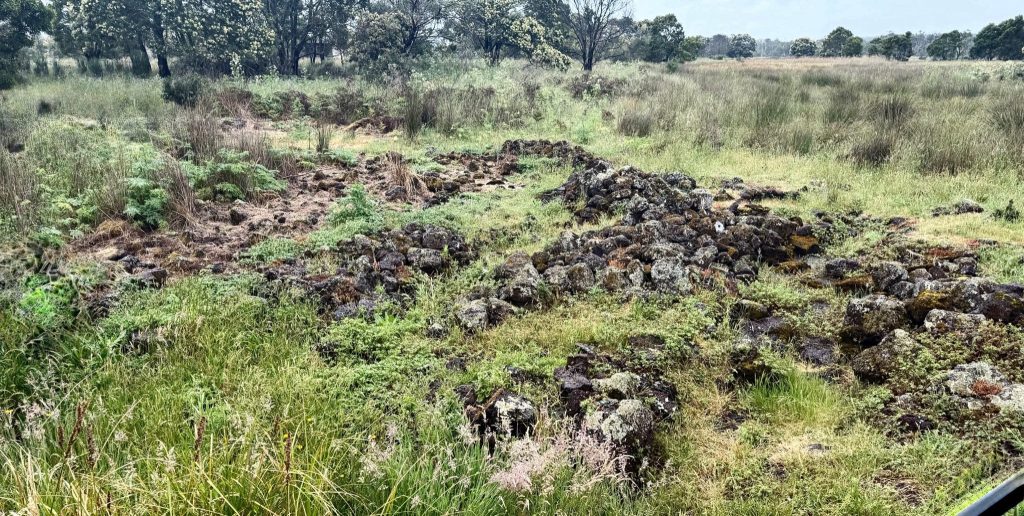
Below is a snap of ruins of artificial stone channels conducting eels to woven traps. Our guide explained that indigenous people sized the rocks by soaking them in water then putting them on a hot fire till they split to about the size of modern bricks. They built the stone walls where the water flowed in natural depressions in the swampy landscape. This aquaculture system dates back at least 6,600 years.
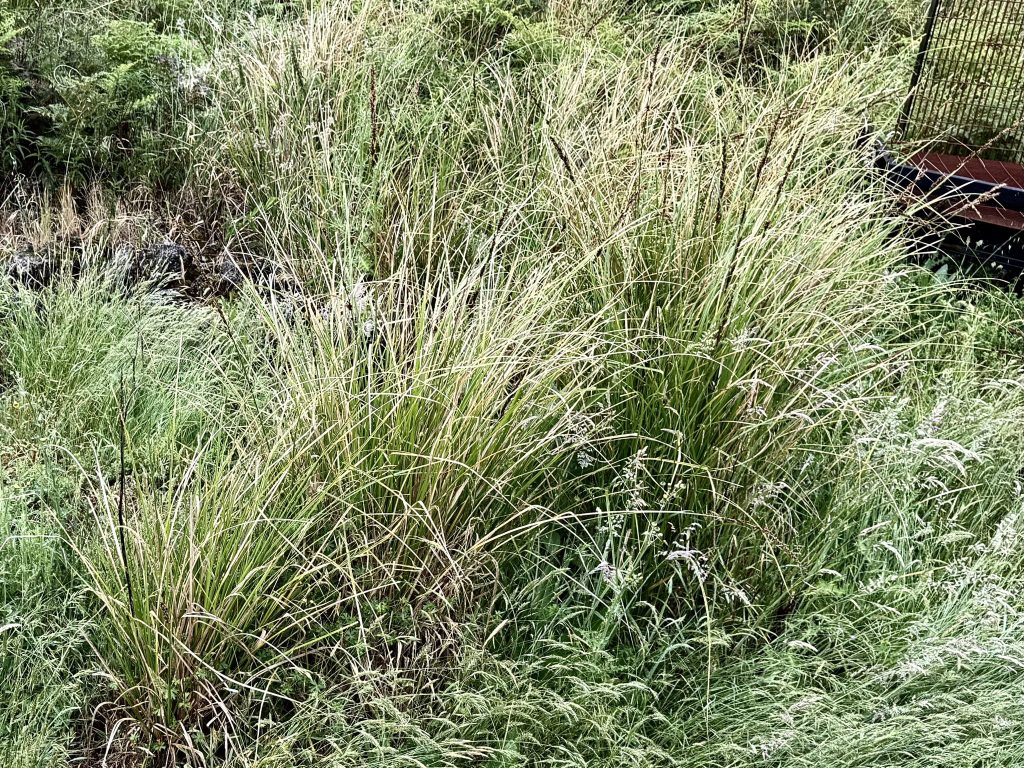
Aboriginal women wove the traps from plentiful rushes, pictured below.
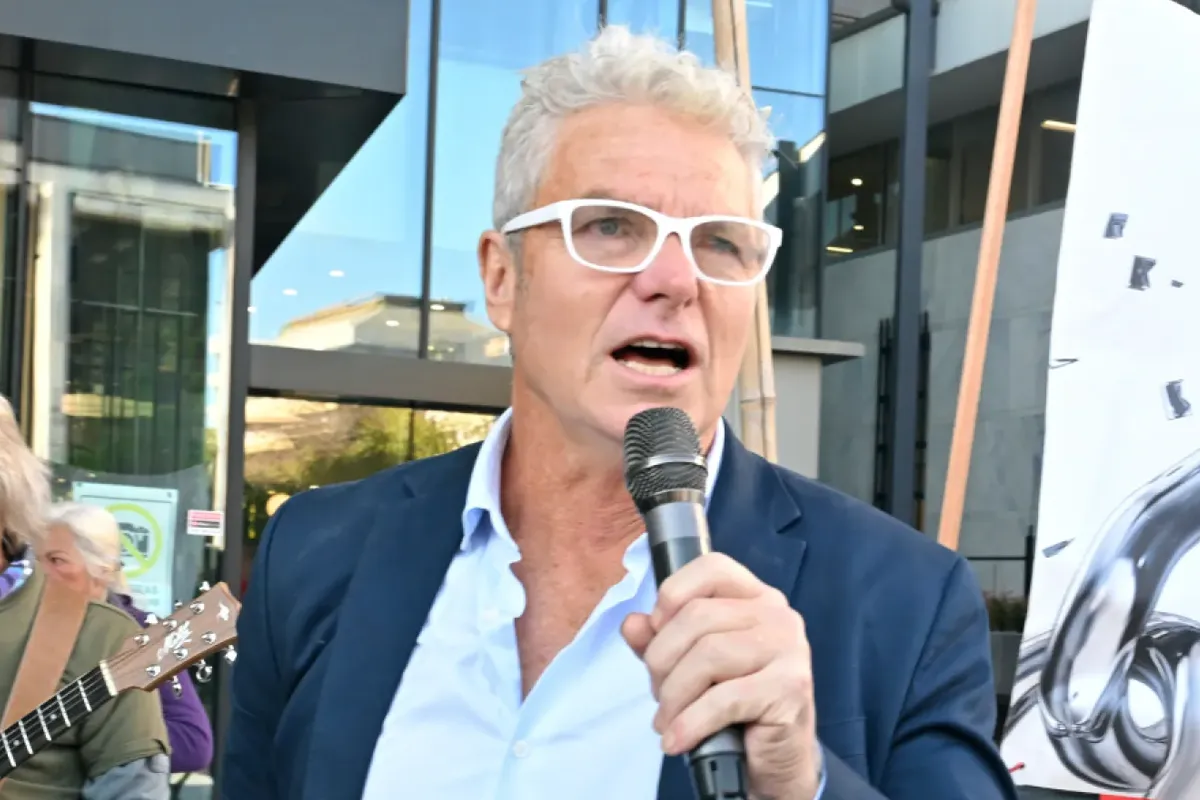
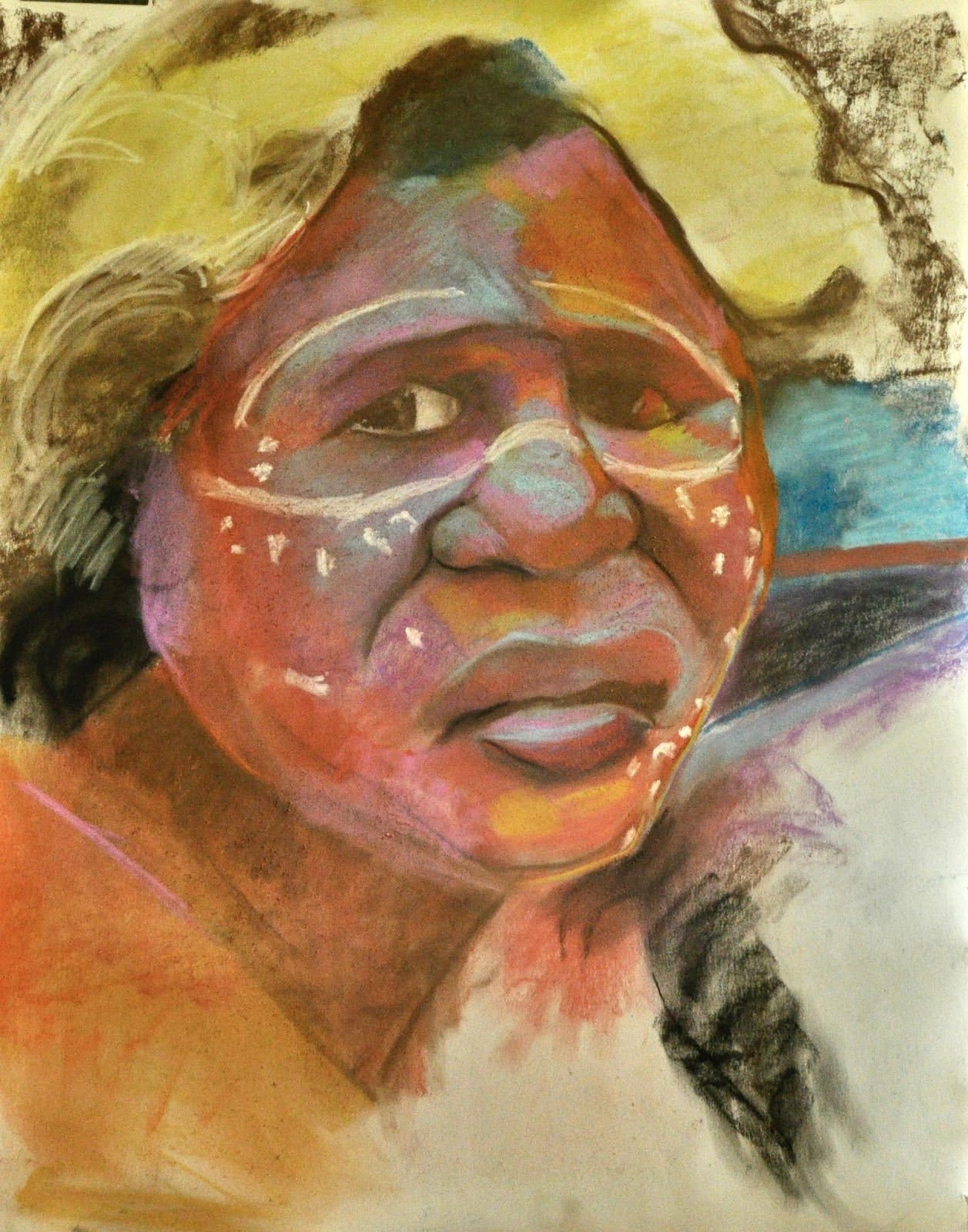
The source of much of the information in this essay is our Aboriginal tour guide, in the photo below, holding a fish trap. My deafness missed her name, but her cheeky confident smile suggests the courage with which she accepts her people’s overwhelming loss, her pride in their surviving culture, and the mettle of their recovery.
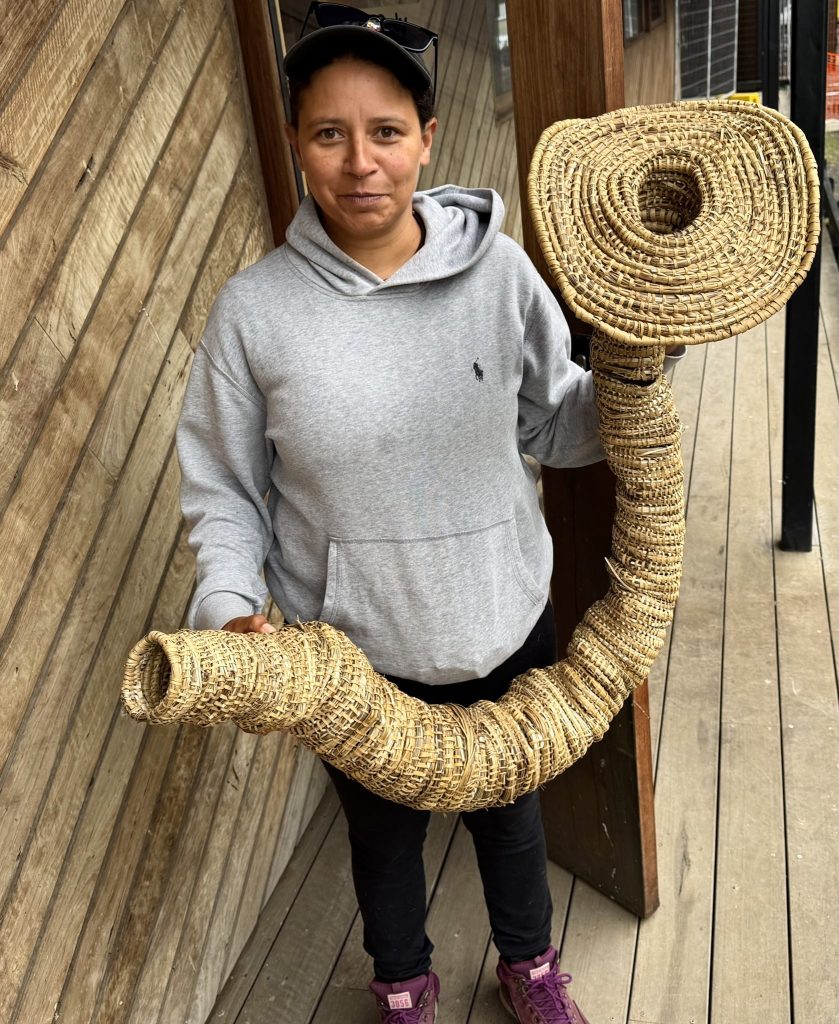
Through the stone walls, they placed the tube between two rocks, with the flange resting against them. They put two more rocks against the flange on either side of its opening, to hold it firm. Eels swam into the opening and along the tube, till they reached the narrowing in her right hand, where they couldn’t turn around.
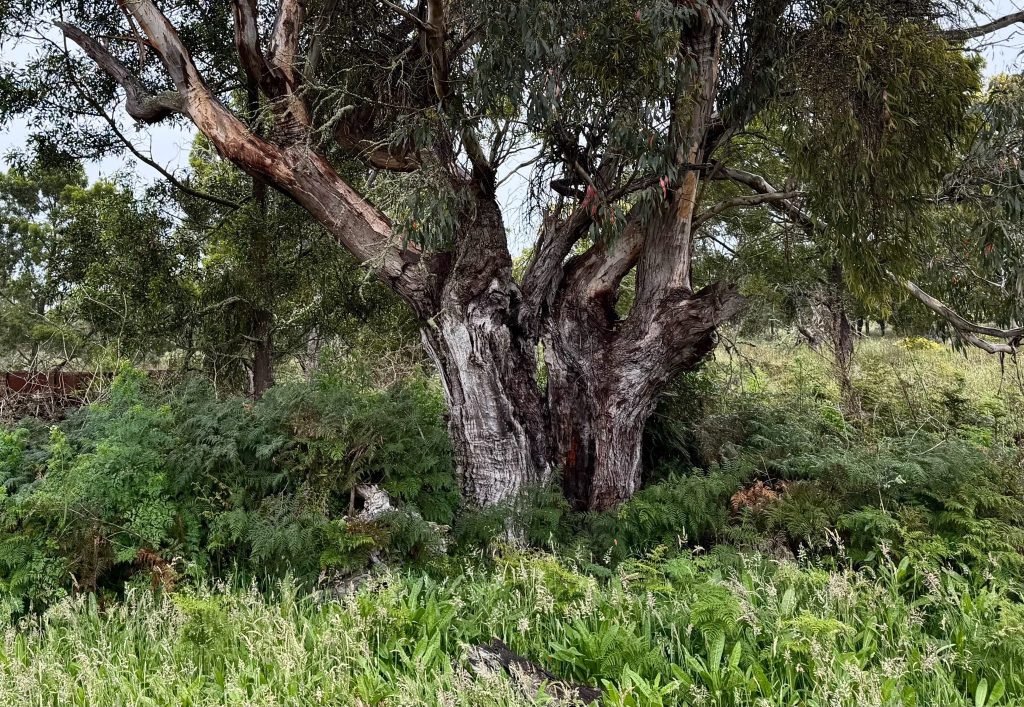
Eels, weighing up to 3 kg, were smoked for twenty-four hours, in a hollow tree. The manna gum below was a smoking tree, since truncated by lightning. The culture and knowledge, however, live on in local Aboriginal people. Tae Rak is now a model of recovery, by people, whose culture included caring for country.
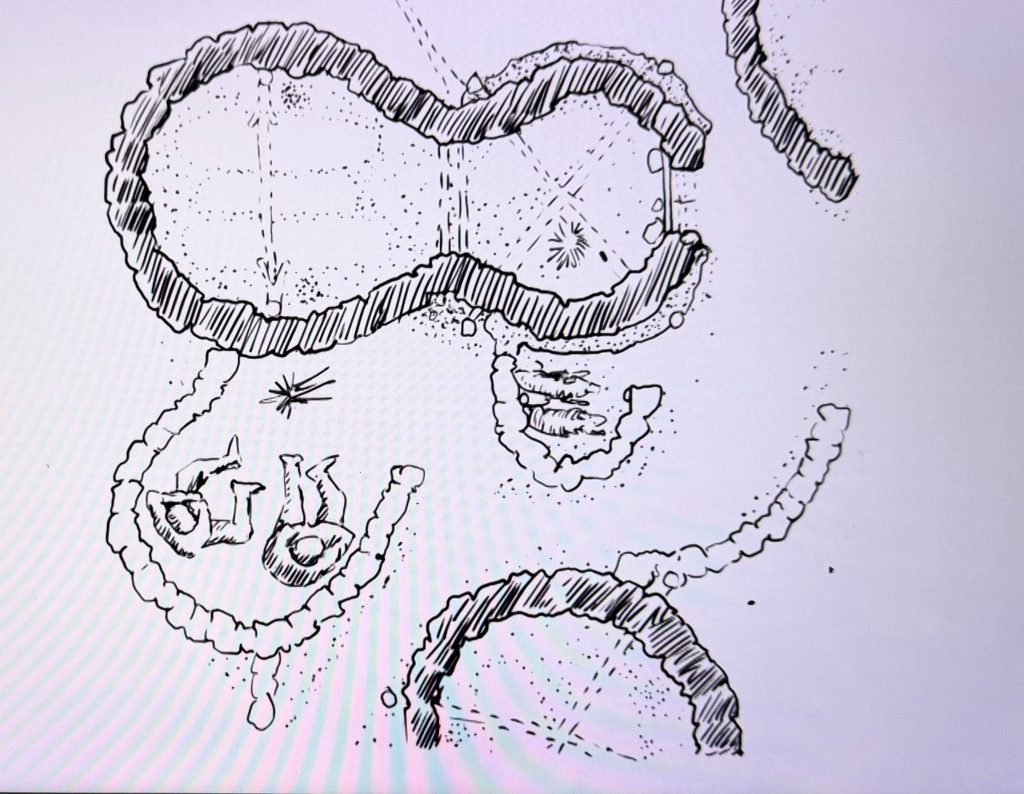
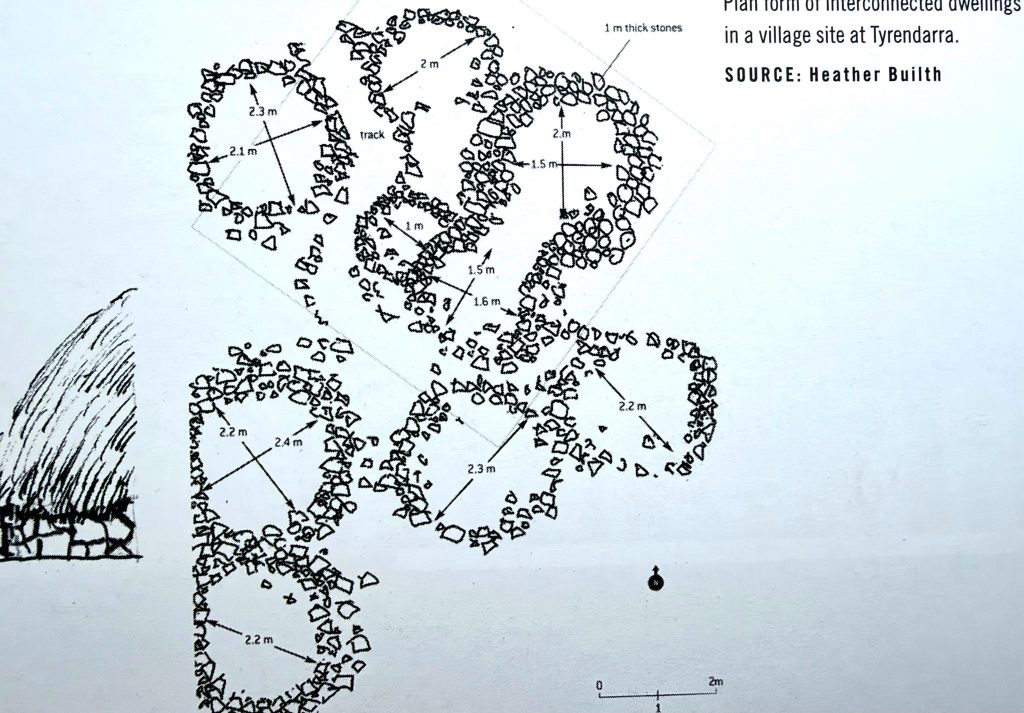
Our guide said families occupied clusters of domed houses: one for the parents, one for each child as they grew old enough to sleep alone, and shelters for their dogs. Mitchell’s diaries also record separate buildings for storing grain.
Family clusters combined as villages. In one village the UNESCO citation acknowledges 103 stone circles. Following a bush fire in this landscape, special aerial photography, identified ruins of about three-hundred circular stone houses, cited by UNESCO.
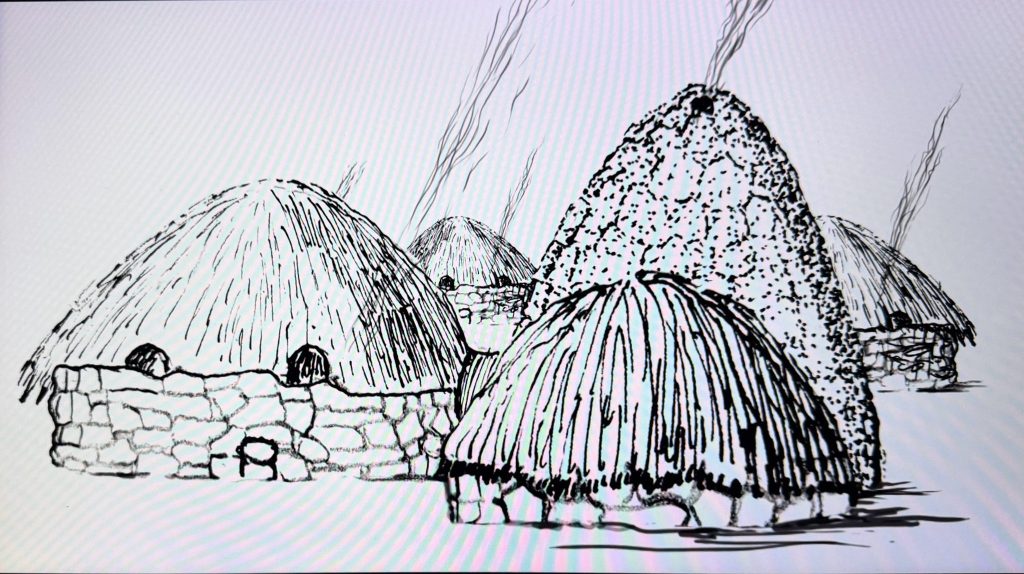
Entries into the domed houses faced north, towards the sun, and away from cold southerly winds. In the illustration above, my eye for difference fixed on the odd, pecked, parabolic dome, second from the right.
Was the draftsperson seeing a dome built all of stone? The vesicular, porous, cindery scoria I saw in ruins on the ground at Tae Rak, was indeed pock-marked. If so, how did they do it? Were the supposed stones laid on timber formwork, or on earth, later removed; or were they corbelled with each successive course laid closer to the centre of the ascending circle, as seen at ancient Greek Mycenae? Could this have been a rat-proof grain silo?
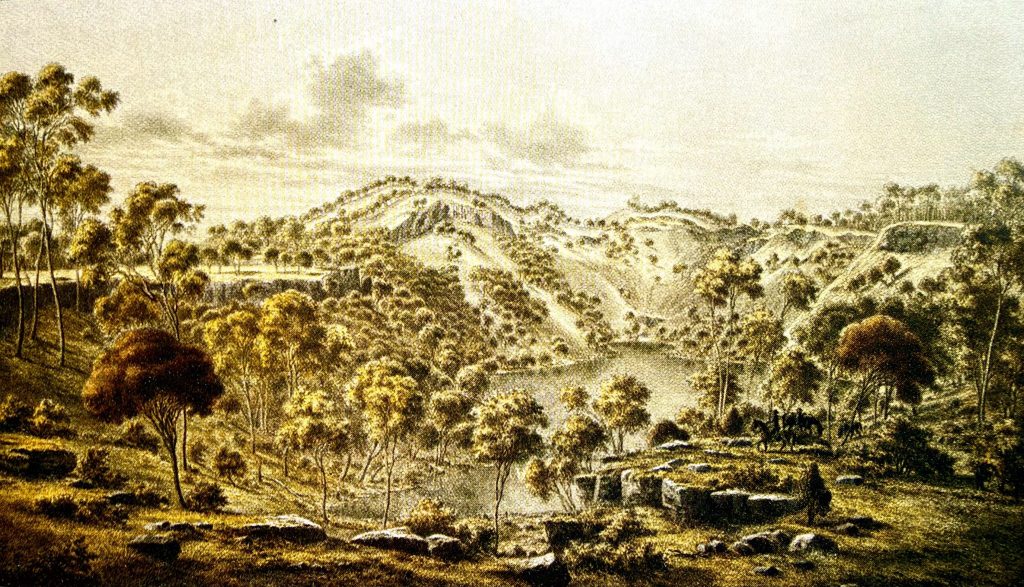
Eugene von Guérard (1811–1901) painted Budj Bim’s (Mt Eccles) volcanic crater in 1858. He shows (below) the manicured open park-like landscape achieved by aeons of traditional mosaic burning. Mitchell described these settled, open parklands. Bill Gammage explains them in The Biggest Estate on Earth (2011) and Bruce Pascoe celebrates them in Dark Emu (2014).
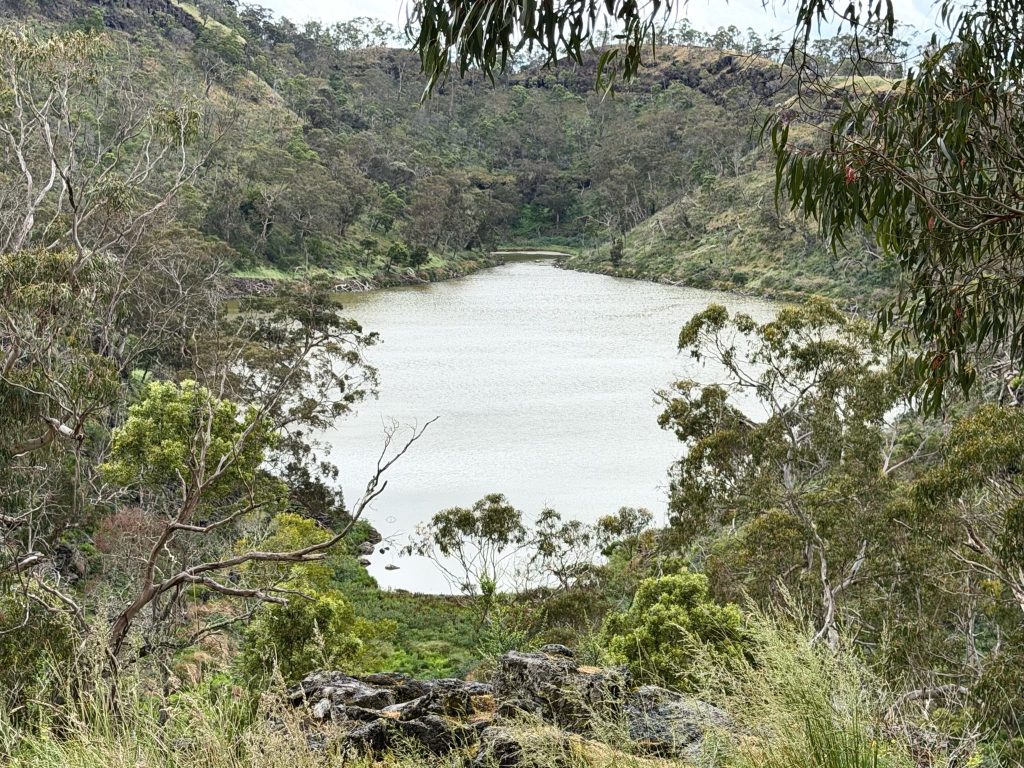
Below is my recent photo of the same landscape, gone scrubby with neglect.
Guiding kangaroos to the sweet grass of the fresh green pick following a cool burn, Gunditjmara people created avenues or corridors of vegetation, leading game also to their ambush. But Aboriginal people never took more than needed.
Imagine hunting, sleeping, dancing and singing, under sun, moon, and stars for tens of thousands of years! Picture Gunditjmara people kicking’ up dust by firelight redolent with eucalyptus smoke, to the rhythm of click sticks, and the eternal drone of didgeridoo! Appreciate the sustainability of their culture over aeons!
Lest you think I’m romanticising and idealising an effortless dreaming existence, however, these Gunditjmara organised work, hydraulic engineering, architecture, masonry, carpentry, resources, food storage, clothing, trade, ceremony, and accumulated knowledge.
More urgent than the expensive conference centre being built, this UNESCO World Heritage site needs a reconstructed village of clustered houses for tourists and experts to experience indigenous human habitation. That would convey Aboriginal culture and dispossession, more clearly.
For example, at Millstream, an oasis in the north of Western Australia, I saw a life-sized wiltja, in which I longed to sit or curl up on the floor. It touched me emotionally, as did childhood visits to Captain Cook’s Cottage in Melbourne’s Fitzroy Gardens.
The word, civilization is problematic: one of its Latin roots, civis, means citizen, presumably of any society. But civilization derives also from the Latin, civitas, meaning, city or city state. Latin, being the language of Rome, strengthens its urban meaning. Given that urban loading, Gunditjmara settlements do qualify as hamlets and villages, but not as towns or cities – not civilized.
In its urban definition, civilization opposes nature and, in the Roman manner, ‘there is no civilization without violence and exploitation’. Our prevailing urban conception of civilisation merges with human advantage through conquest, plunder, domination, and exploitation, not only of nature, but also of fellow humans.
Dominance is a feature of urban civilization, which is arranged in hierarchies of power, in the tiers of government, in the church, in education, in science, in the law, in other professions, in business and industry, and in the military. Indeed, urban civilization inherits The Military Model from classical times, from ancient Greece, and Rome. It is so ubiquitous that it’s now taken for granted.
But it’s only one side of a coin, and it is a fabrication, an artefact of urban logic. Moreover, it’s only an abstract idea, based on conflict. Claiming the ultimate, it is powerful and dominant. It justifies social stratification, with the Divine Right of Kings at the apex of a pyramid, and those less privileged at lower levels, all the way down to nature at the bottom.
Although understandable in war-torn times, conflict is a dubious choice as a foundation for culture and society. As an alternative, nature is also cooperative. Instead of a singularity, nature is multifactorial, plural.
With better weapons, and accidental germ warfare, our settler culture, highly civilized in city terms, dominated the Gunditjmara, highly civilized in rural terms, and we can’t turn back the clock. Our Aboriginal guide assured us of good relationships now developing between local graziers and her Tae Rak community.
But, to now use our urban view of civilization to judge a rural civilization is biased and unfair. To judge Gunditjmara civilization by urban standards, is both negative and confusing. The absence of cities is not sufficient reason to deny their civilization.
We might dodge our prevailing urban loading for the Gunditjmara by avoiding the word civilization altogether, in favour of society and culture. With an alternative definition, however, their organised, complex, sophisticated culture does qualify as a civilization. If that is shifting the goal posts, it is a shift long overdue.
White settlement brought its urban civilization along with the violence of our frontier wars, still within the tribal memory on both sides of the frontier. The sketch below is of the 1833 Convincing Ground Massacre, near Portland, over territory and over whalers misusing Gunditjmara women.
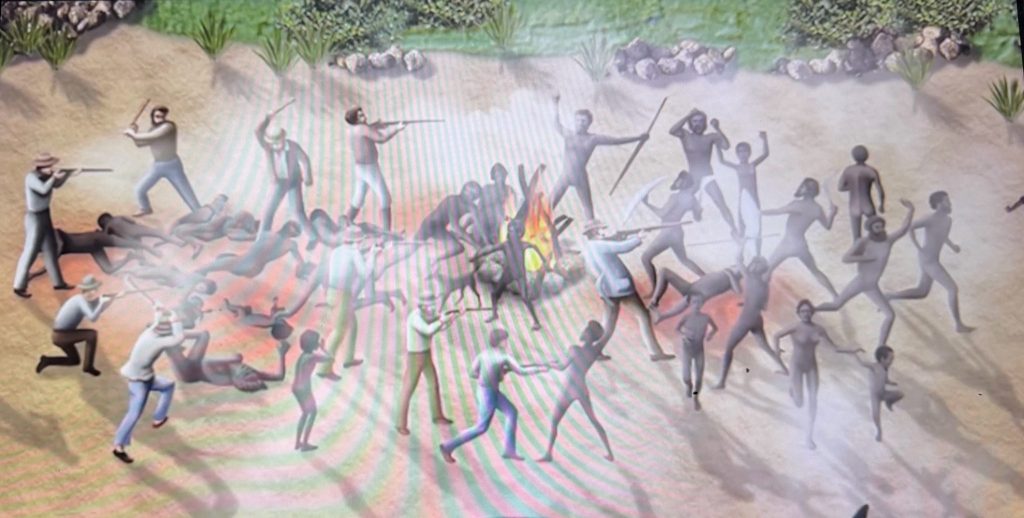
Accounts of the massacres are sickening. For a national overview, read, Blood on the Wattle, Massacres and Maltreatment of Aboriginal Australians since 1788 by Bruce Elder (1988). In our frontier wars, who were the savages? Settlers regarded “the life of a black as of no more value than a wild dog”. First Nations people were managed by our Minister for National Parks and Wildlife.
Destroying the evidence against the convenient fiction of terra nullius (empty land) settlers burnt the thatch and took the stones for their fences and chimneys. Indigenous villages vanished within a year.
But ‘the truth will out’, and these ruins dispel whitefella propaganda about feckless black nomadic wandering hunter-gatherers, incapable of developing technology, or the land, despite Mitchell’s records of fields, harvests, houses, grain stores, aquaculture, and villages. Pascoe claims apparel, adornment, and even pottery.
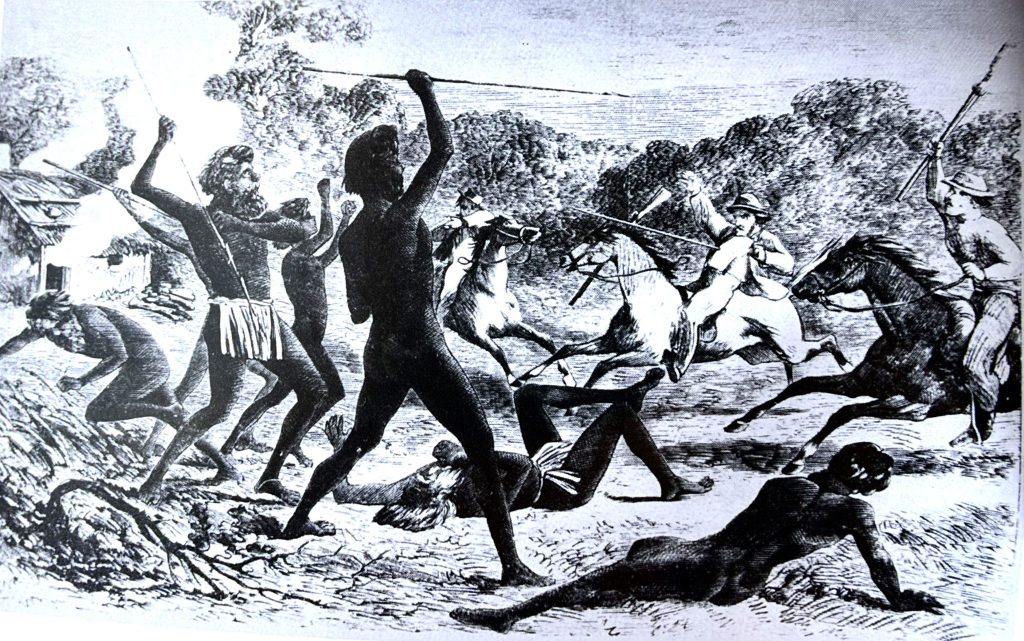
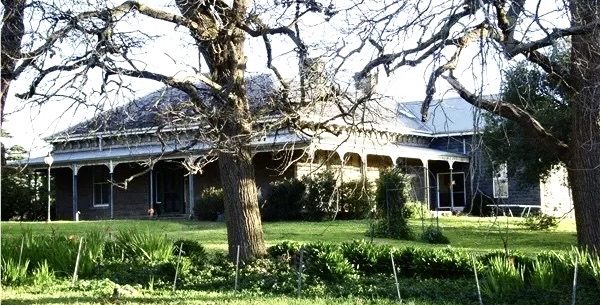
Sailing in 1834, from Launceston to Portland, massacring indigenous people on the beach, and squatting on their country, the Henty brothers built great barns and a house of the local basalt, a day’s march inland near Heywood. I’ve known and liked Henty descendants. The original house was since extended. At the front gates of their nearby spread, cannons guarded an avenue of old dark pines, winding a mile to a circular gravel drive fronting the Victorian bluestone pile, now in the hands of my mother’s cousins.
Having made a fortune on Glenisla, another station not far north of Tae Rak, another cousin, retired to the harbourfront at Double Bay. In my twenties, I danced waltzes and foxtrots at a black-tie ball, in yet another neighbouring bluestone mansion with an ivy-mantled tower. The wealth and privilege enjoyed by later generations of settlers, my privilege included, rose on the dispossession of those whose country we occupy.
Even more personal, but nothing more than a walk and a sleep would clear, I drove away from Tae Rak, depressed, falling into a vertiginous void, partly because my deafness excluded me from the conversation, partly from the ecology, beauty, simplicity, refinement, antiquity, and inevitable tragedy of our dark history.
I felt dismal over our colonial culture spoiling, not only First Nations’ life, but spoiling also my own childhood. I grieve over decades of my life lost to repression of my inner self, in favour of conventional education, designed to fit me for colonial service; I regret my decades of privileged boredom, anxiety and depression; I still ache over my struggle to get free.
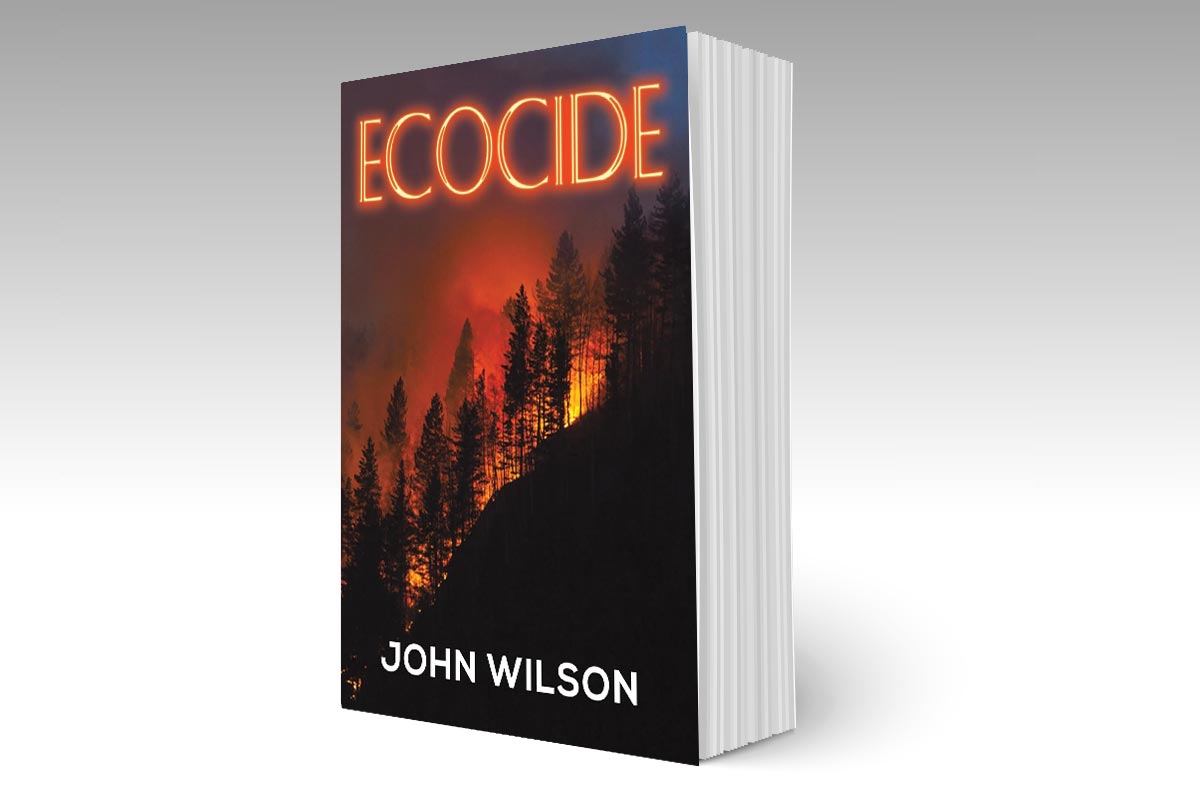
I grieve over my failures to meet expectations of our British colonial culture. As discussed in my 2022 book, Ecocide, its questionable ideal, inherited from ancient Greece and Rome, outlawed, not only native people, but also the native within me – my native self – from my primal earthy nativity.
I grieve over losses of family and friends resulting from diverging values. In mutual fidelity, try as we did, neither my late mother, nor I, could bridge the gap widening between the genteel culture of her vainglorious imperialism and my developing dissent. “Dear, I don’t see why we should give any land back to the aborigines”, she challenged, with a note of irritation, “No conquering nation ever did that before”. . . . “Dear Mother”, I replied, “All the more reason, that we do so now”. Meryl Streep, playing Karen von Blixen in Out of Africa, replied more simply, “Because they live there”
Many upset about the heartbreaking Palestinian genocide, with selective amnesia, still overlook our own Australian genocide, not only in the past but also continuing today, with Aboriginal Deaths in Custody (Prof. Heilpern, personal communication) and with other degrees of racism. Travelling Australia, I have no doubt that we live amid the ruins of our genocide. Farmers arrange stone-age axe heads and spear points on their mantle pieces.
These ruined eel traps and razed basalt houses memorialise an extraordinary civilization. Aboriginal people and their sustainable culture span 65,000 years in Australia. The enormity of our holocaust is shocking, destroying this ancient tissue of our own being. More poignant is the dawning realisation that the lifestyle and values we destroy might be the key to our own survival.
Anyone meditating earnestly will change – not only inwardly, but particularly in behaviour – including lifestyle. In the slow process of my individuation, and for love of peace, I escaped to the quiet and beauty of the healing and nourishing bush! How much better than our insane frenzy of modern suburban life, with prolonged education, competition, and alienation; with endemic mental illness, television, technology, industry, advertising, and traffic!
Towards evening, I stop driving. I walk. I sleep. I paper over these cracks, but only for a while, for, ‘this whispering in my heart’ (Henry Reynolds) reminds me that the tragedy of our genocide is but a part of our more general ecocide. Western capitalist and industrial culture degrade, not only indigenous life, but also our natural ecology, the social ecology of our own culture, our relationships, and the inner ecology of our psychology. (Félix Guattari).
Intoxicated with the Enlightenment and conquest, we ruined a sophisticated, sustainable culture without understanding what we were destroying. In doing so, we dismantled something we may need to recover. Those we regarded as primitive seem to have practiced something about life on Earth that we forgot.
But, before we bring tumbling down the great house of our awesome urban civilization, who would forego their motor car? Who would forego the astonishing benefits of modern medicine, so deeply entwined with capitalism and industry? The culture supporting the medical technology of immediate personal survival jeopardises long term survival of that culture. That conundrum sounds like an end game.
Rather than exploiting the world, the Gunditjmara developed a sophisticated culture, working with nature. This redevelopment at Tae Rak might inspire a shift in our culture from exploitation towards eco-centric cooperation.